Montpellier hosted the 2026 International Congress of the Society for Ethnobotany
From May 31 to June 4, 2026, Montpellier hosted the annual international conference of the Society for Ethnobotany (SEB), bringing together more than 230 participants from 42 countries to discuss the theme “Undisciplined Ethnobotany.”
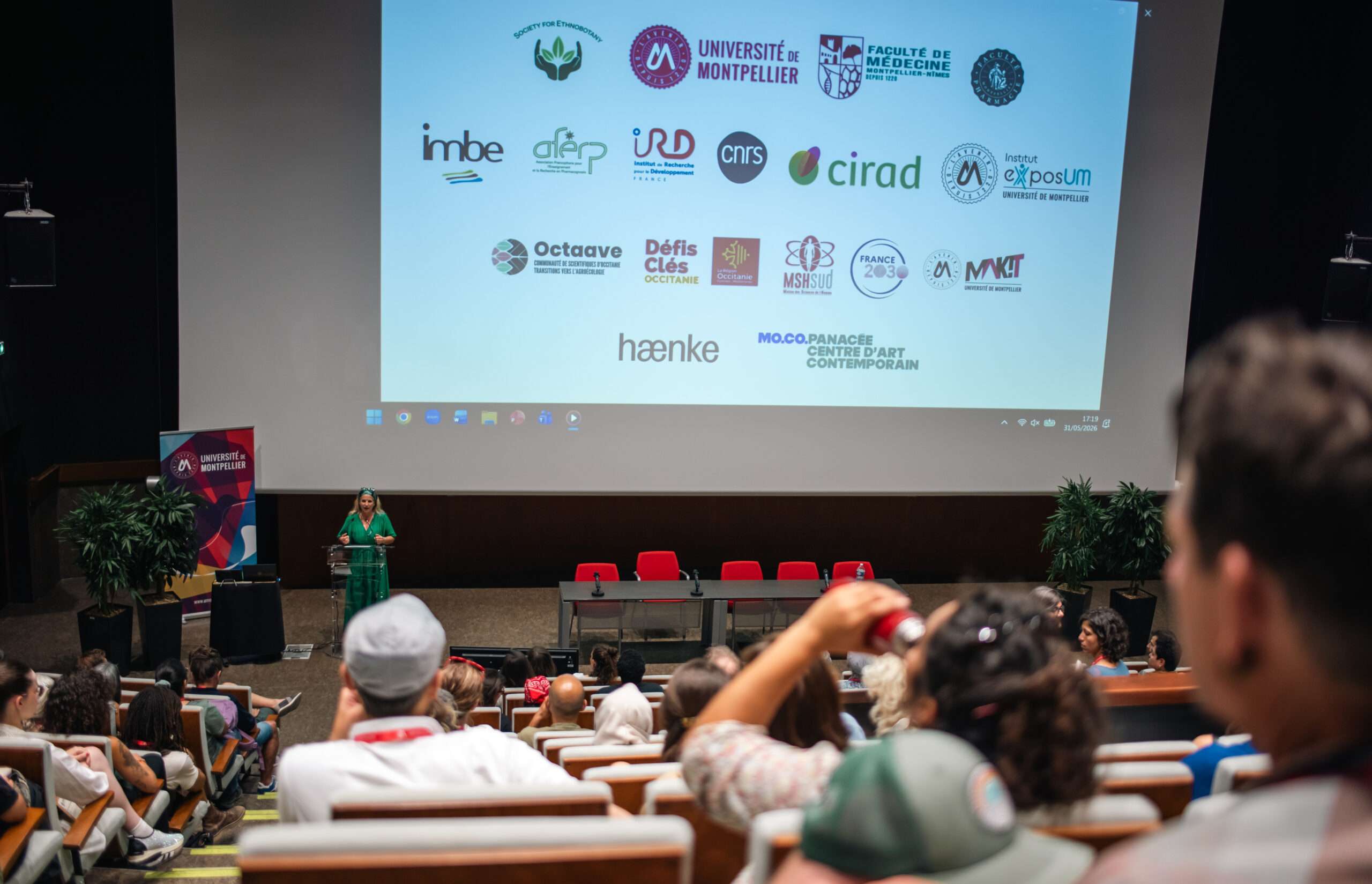
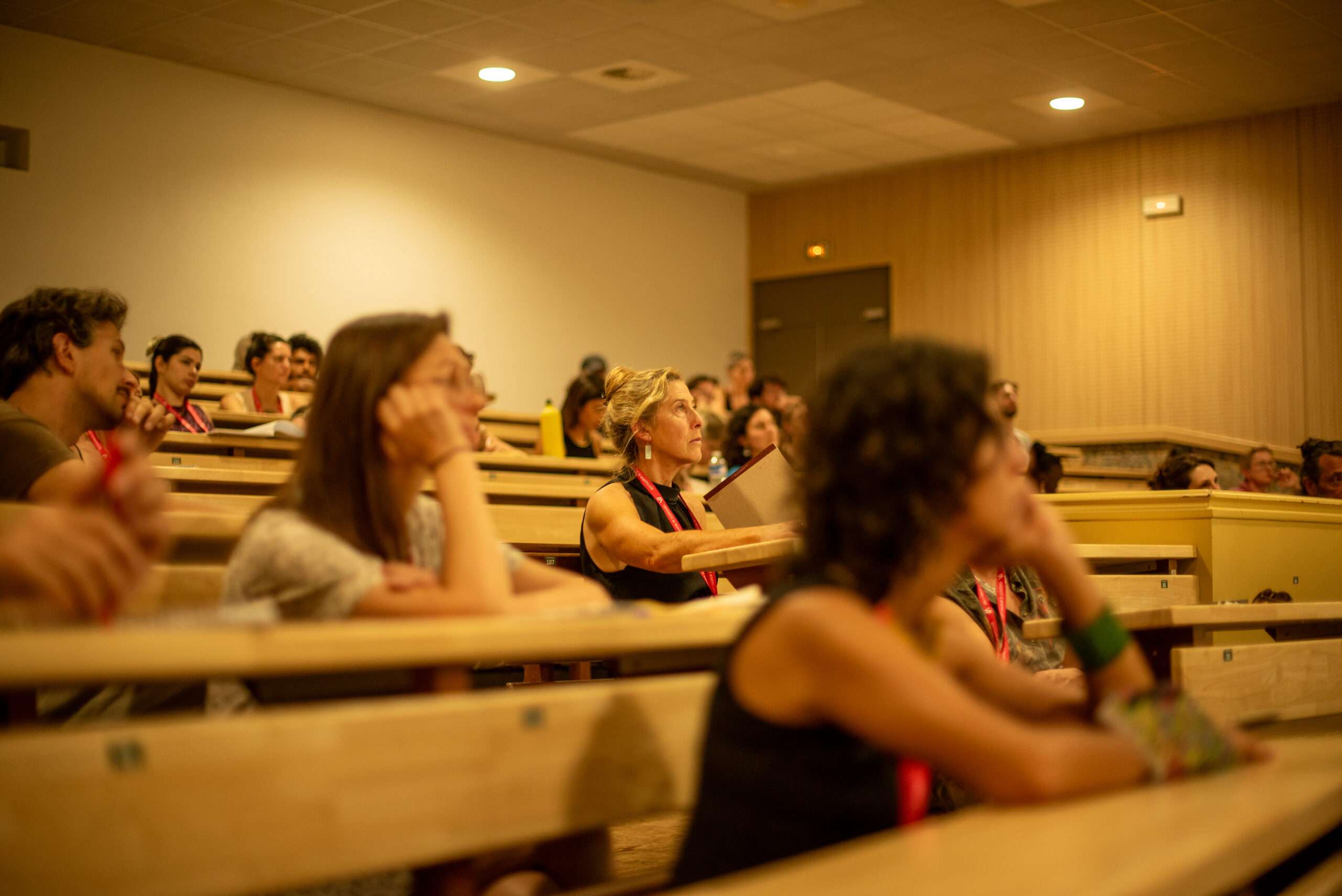
Over the course of five days, researchers, artists, scientists, designers, activists, and practitioners explored the multifaceted relationships between plants, societies, and territories through a transdisciplinary program blending science, the arts, and contemporary ecologies. Discussions focused on medicinal plants and traditional medicines, food systems and agroecology, Indigenous knowledge and decolonial approaches, as well as the connections between ethnobotany, design, architecture, and material cultures.
Held at several iconic venues in Montpellier—including the Botanical Institute, the Jardin des Plantes, the Maison des Sciences de l’Homme Sud, the School of Pharmacy, and the MO.CO. Panacée—the conference featured more than a hundred scientific presentations, workshops, roundtable discussions, screenings, artistic performances, and field trips throughout Occitanie.
The plenary sessions were led by Sandrine Gallois (Institut Botànic de Barcelona), a specialist in indigenous ecological knowledge in the Amazon; Darío Iza ( Kitu Kara Indigenous Nation, Ecuador); Kenza Benabderrazik (ETH Zürich, Switzerland), a researcher in urban ethnobotany and biocultural heritage; and Xiaoyue Li (Southern Methodist University, USA), whose research focuses on the relationships between ecological knowledge, cultural practices, and contemporary environmental changes.
A program open to the public
The conference also opened its doors to the general public through several events. On June 2 and 3, an international exhibition held at the Orangerie in the Jardin des Plantes brought together eight international artists to explore the relationship between humans and the plant world, featuring works that combined installation, textiles, sound, video, and performance. The exhibition design was created by the Montpellier-based studio Heim+Viladrich.
The opening ceremony, held on May 31 at the Charles Flahault Institute of Botany, was attended by Claire Hart, vice president of Montpellier Méditerranée Métropole in charge of international outreach, Jean-Paul Cristol, executive vice president of the University of Montpellier in charge of research relations with health institutions, and Sonia Peter, president of the Society for Ethnobotany, who officially inaugurated the 2026 edition of the conference.
On June 3, the conference also featured the presentation of the Distinguished Ethnobotanist Award to ethnobotanist Tinde van Andel, followed by a closing reception at MO.CO. Panacée, featuring local cuisine and live music.
Highlights at the School of Pharmacy
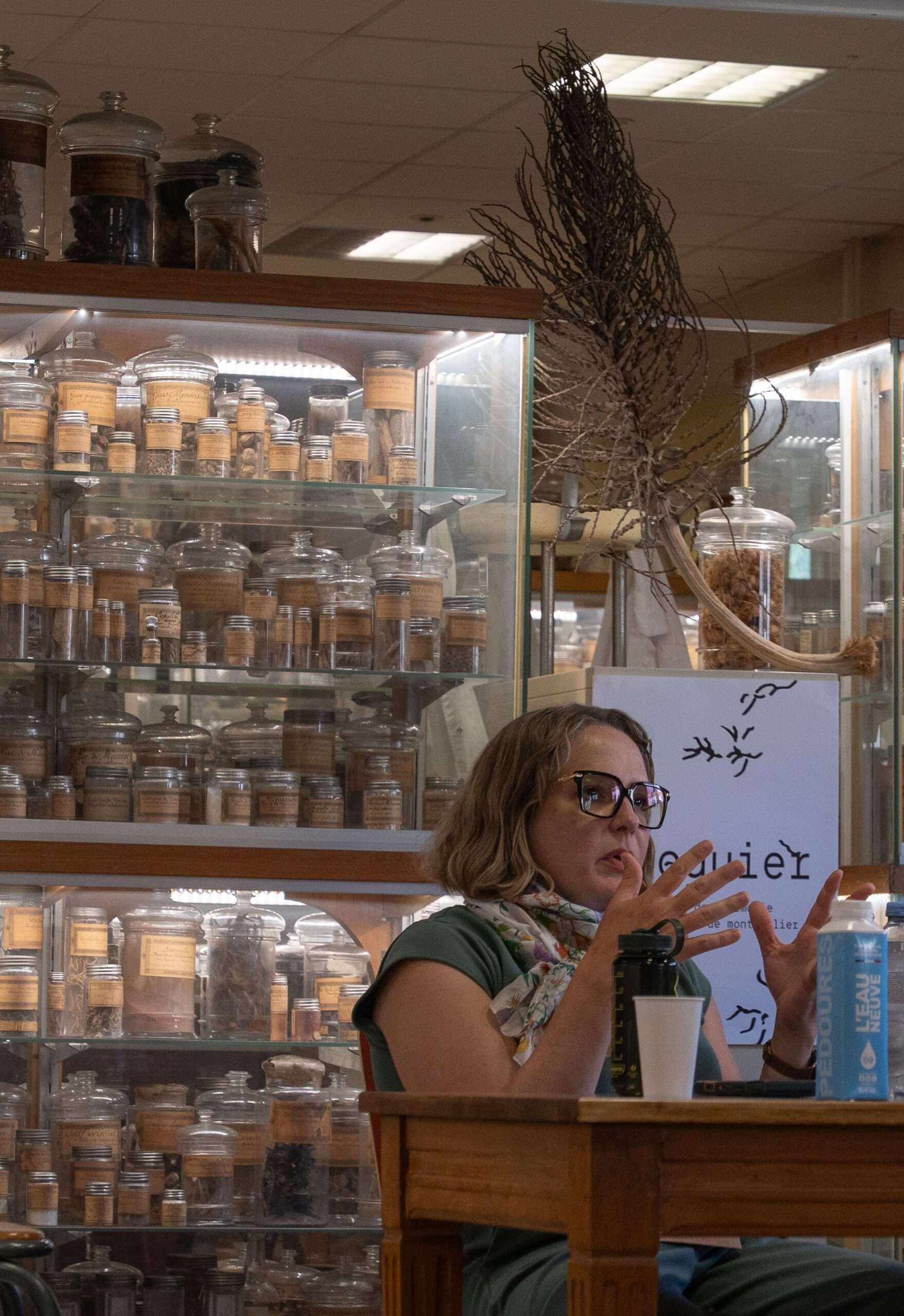
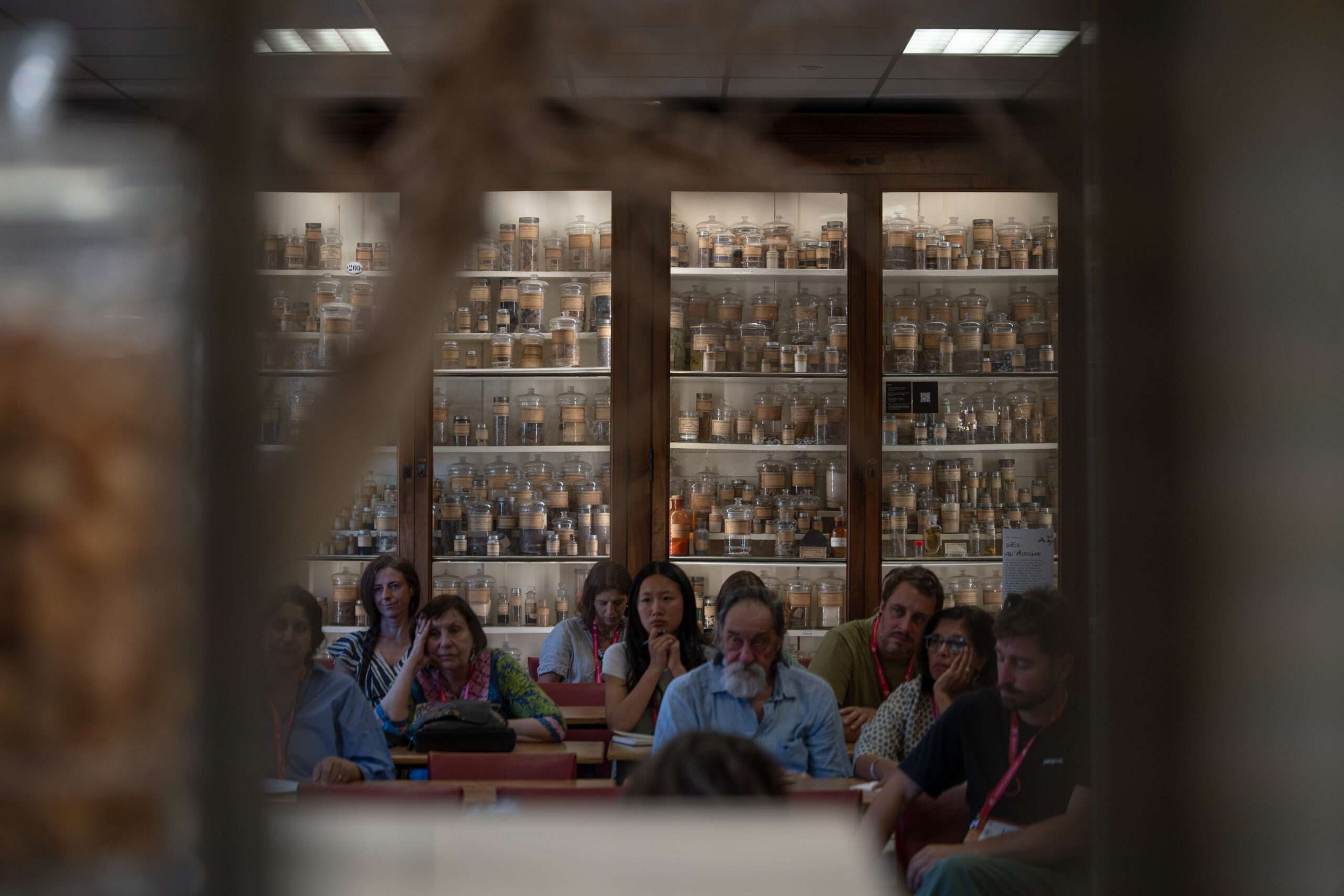
The School of Pharmacy was one of the main focal points of the conference. In addition to the scientific sessions and workshops held on-site on June 3, it hosted a roundtable discussion in the historic setting of the Droguier. Moderated by Alexandra Strelcova (Haenke), the discussion brought together Cassandra Quave (Emory University), Kenneth Otero Walker (New York Botanical Garden), and Mark Nesbitt (Royal Botanic Gardens, Kew) to discuss the decolonial challenges surrounding materia medica collections, their potential as sites of reparation, cultural continuity, biodiversity conservation, and the exchange of non-human knowledge.
The School of Pharmacy also hosted an international conference on biocultural collections, moderated by Jan Salick, which provided a forum for collection curators, researchers, and heritage professionals to discuss contemporary challenges related to the conservation, documentation, and future of ethnobotanical collections.
These events, organized in collaboration with Haenke and the Droguier Chair at the University of Montpellier’s School of Pharmacy, reinforced the interdisciplinary nature of the conference by fostering a dialogue between scientific heritage, contemporary research, and critical museum practices.
Montpellier, the international capital of ethnobotany
By hosting the 2026 edition, Montpellier has reaffirmed its role as an international hub for research on the relationship between humans and plants. With a long tradition in botany and medicine, the city provided a particularly conducive setting for dialogue among disciplines, institutions, and field practices.
The conference was co-organized by the Society for Ethnobotany,the University of Montpellier,IRD, CIRAD, CNRS, and the Maison des Sciences de l’Homme Sud, with the support of numerous local, national, and international partners.
The 2026 edition demonstrated the growing interest in an open, collaborative, and contemporary-issue-focused ethnobotany that fosters dialogue among scientific research, artistic creation, local knowledge, and environmental stewardship.