International Mobility – Reflections by Sonia KHIER, Associate Professor
My Background
I studied pharmacy, with a fifth year focused on research and a sixth year in a pharmacy. I passed the internship exam at the end of my sixth year.
I completed my four-year residency in Montpellier and Nîmes, specializing first in hospital pharmacy and then in industrial pharmacy and medical biology. During my residency, I specialized in pharmacokinetic modeling—in particular through an internship at Sanofi—and, alongside my residency, I worked on my doctoral dissertation. It was at the end of my studies that I took the competitive exam for a faculty position because a job opening in pharmacokinetics had become available, although initially I was leaning more toward a career in the pharmaceutical industry.
My Teaching Activities
I primarily teach pharmacokinetics: mechanistic pharmacokinetics, pharmacokinetic modeling, and AI methods used in the development of pharmacokinetic models. I currently teach mainly in the Master’s program in Epidemiology, Health Data, and Biostatistics (EDSB) and in the Industry track, after having been very involved in and taught in the Internship track in the past.
My Research Activities
The focus of my research is the development of pharmacokinetic models that relate dose, exposure, and patients’ clinical response to treatment. These models also help identify factors contributing to interpatient variability. They support the personalized use of certain therapeutic classes (antibiotics, immunosuppressants, anticancer drugs, etc.) by proposing individualized dosing for each patient. In other situations, they provide the only dosage recommendation available. This is particularly true for patient populations for whom no dosage is recommended in the marketing authorization (pediatric patients, patients with rare diseases, women, or pregnant women).
My International Mobility in 2022–2023
Research leave (CRCT) allows faculty members to devote themselves entirely to their research for a specified period. For my part, I was granted a one-year CRCT through the National Council of Universities (CNU).
I structured this CRCT over two periods; my goal was to focus on using innovative pharmacokinetic modeling methods so that I could develop models tailored to pediatric patients and pregnant women.
I worked for six months at the Geneva University Hospital with Professor Ansari’s pediatric oncology department to develop a model that will help reduce infant mortality (children aged 0 to 2 years) when using busulfan. In fact, for this population of children, it is particularly difficult to find effective, non-toxic dosages due to physiological (and therefore pharmacokinetic) and pathological heterogeneity. The model developed partially addresses this challenge.
Next, I worked for six months with Dr. Niina Kleiber, a pediatrician at Sainte Justine Hospital in Montreal, who is a leading expert in the treatment of vascular anomalies (an orphan disease encompassing a variety of symptoms). Of the 87 medications used to treat these children, only two have marketing authorization for pediatric use. I am developing pharmacokinetic models for several of these drugs in order to propose appropriate dosages for these patients.
During my exchange, I also established a collaboration with the Medicines for Malaria Venture (MMV) Foundation with the goal of improving our understanding of pharmacokinetics in pregnant women so that they can safely use the medications they need, because even in this area, there are very few drug approvals that specify dosages tailored for pregnant women, even though they require tailored care.
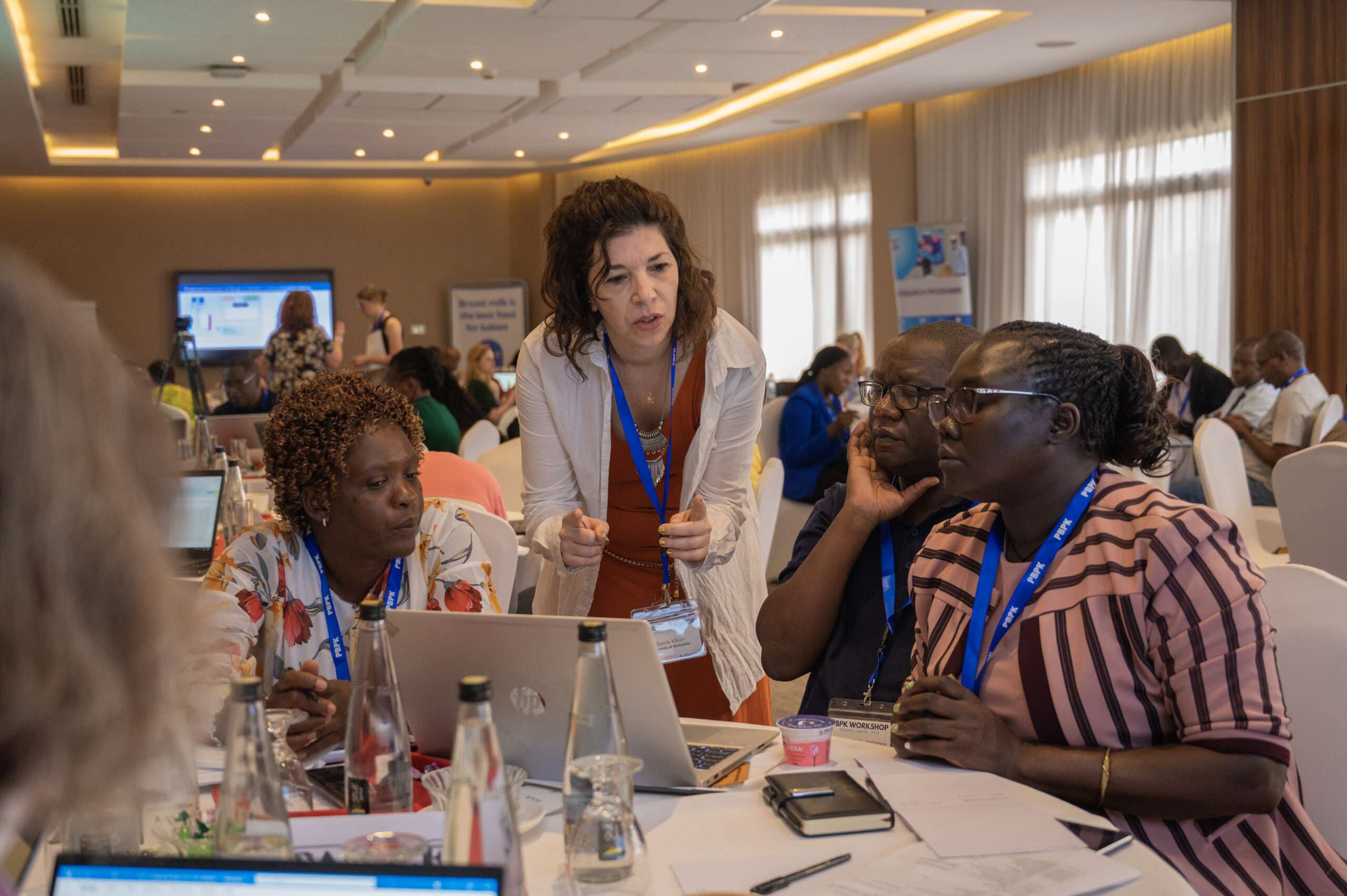
Together with MMV and other foundations, we have also developed a training network across the African continent to make training in pharmacokinetic modeling (or pharmacometrics) more accessible, and we regularly provide training to students and healthcare professionals on the continent. The most recent training sessions took place in Uganda and Senegal.