Spotlight on the “Feed —Soigner—Protéger” doctoral platform by Karen Lambert-Cordillac, the platform’s academic director
Launched in May 2023 by the University of Montpellier, in collaboration with the University of Pretoria, the global collaborative doctoral platform FOODS—“Feed, Soigner, Protéger”—brings together 17 partner institutions across five continents. Its goal is to build an international community of young scientists committed to the sustainable transformation of food systems.
A transdisciplinary and intercultural approach
FOODS aims to pool knowledge and foster innovative solutions at various levels. The approach taken is both transdisciplinary and intercultural, encouraging diverse perspectives, reflexivity, and dialogue between the Global South and the Global North.
The platform's main objectives:
- Develop knowledge aimed at transforming food systems;
- Build a global network of expertise and influence;
- To train future leaders in the field of sustainable development.
Each partner university selects two doctoral students who are in the early stages of their dissertation and who participate in several international training sessions.
An example of collaboration between Montpellier and São Paulo
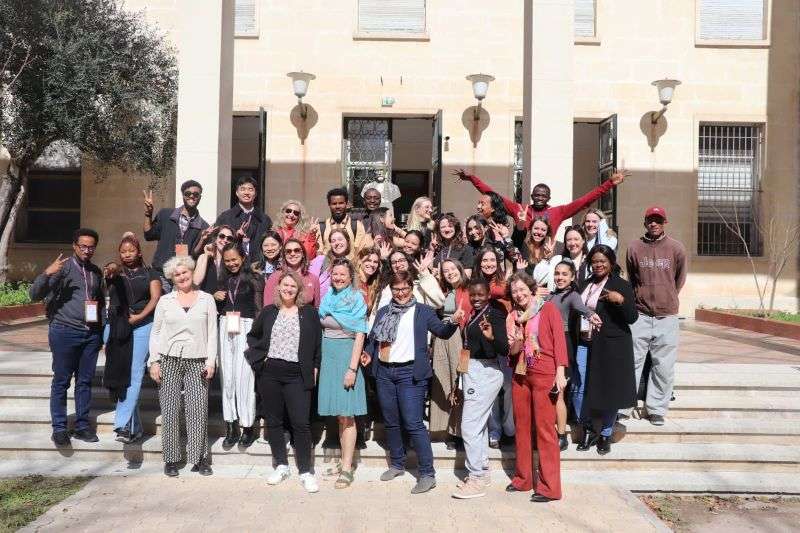
The first cohort, consisting of 33 participants from 18 countries, gathered for an inaugural field school in March 2024 in Montpellier, focusing on the theme: “Barriers to the Transformation of Food Systems.” The workshop focused on the case of the Montpellier metropolitan area. In November 2024, a second session was held in Piracicaba, Brazil, in partnership with the University of São Paulo.
The next phase will take place in September 2025 at the University of Pretoria in South Africa. Meanwhile, a second cohort was selected in February 2025. It will begin its program at Laval University (Quebec) this coming November, focusing on a new theme: “How food systems can help prevent the rise of chronic diseases worldwide.”
The research conducted by the doctoral students has resulted in several scientific publications currently in progress:
- Understanding Food Systems: A Comparison of the Case Studies of Piracicaba, Brazil, and Montpellier, France;
- Position Paper: Experience with the Feed Care Protect Platform;
- How government policies and municipal actions influence the structure and functioning of local food systems. A case study in Piracicaba and Montpellier.
These exchanges also led to active participation in major international events.

A formative experience for future committed researchers
Beyond its academic benefits, this platform offers a unique experience in international collaborative learning. Exchanges between students from vastly different cultural and geographic backgrounds help broaden research perspectives and enhance the relevance of their dissertation work. These interactions foster the emergence of new ideas and lasting collaborations.
Students also have the opportunity to present their work at major events (Montpellier Global Days, G20 preparatory meetings, COP, meetings with deans and representatives from major cities, etc.), allowing them to build a network of valuable contacts for their professional future.